
Best Time to Pour Concrete in Central Florida
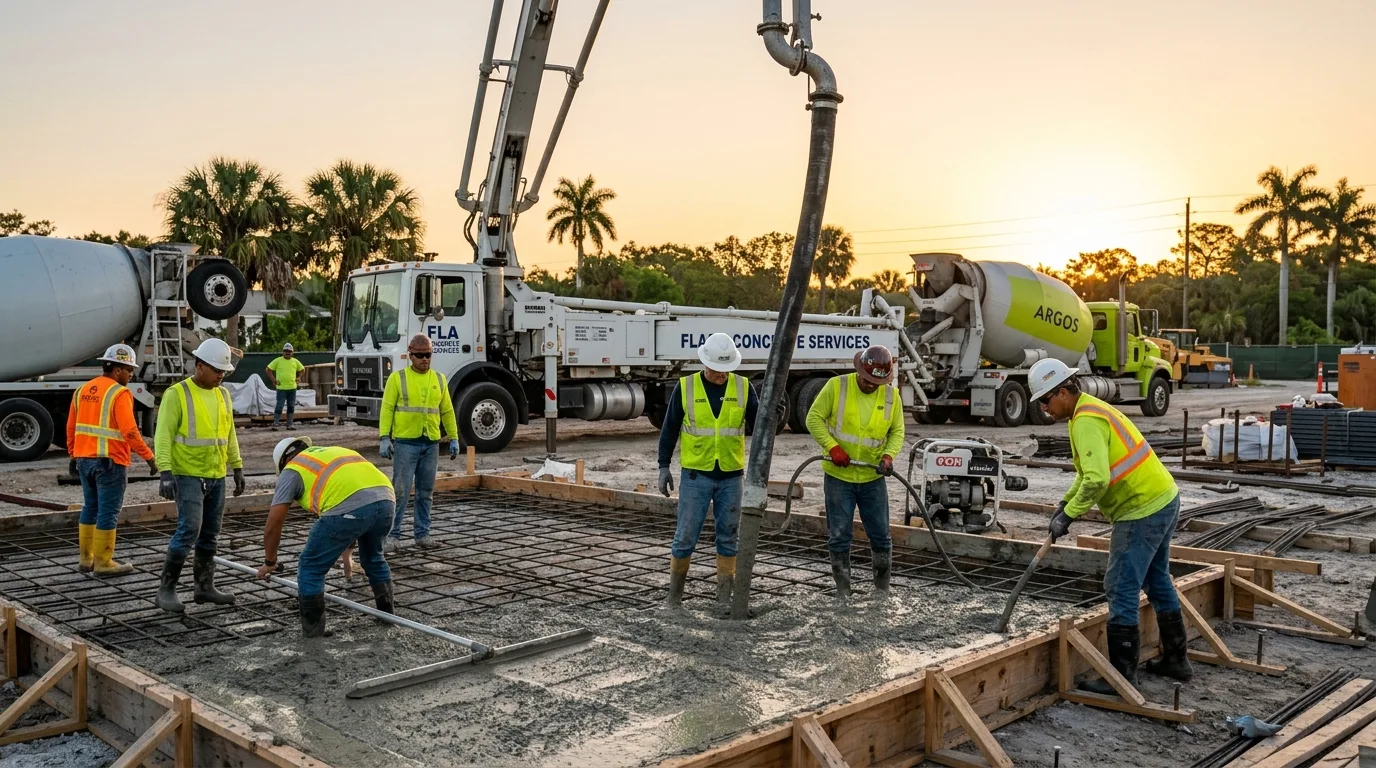
One of the most common questions we get from Celebration homeowners is: when is the best time to pour concrete in Central Florida? The short answer is October through April — but the longer answer requires understanding how Celebration’s specific climate affects concrete curing, and what good contractors do to make summer pours work when needed.
Ready to Schedule Your Concrete Project?
We work year-round in Celebration, FL with proper techniques for every season. Get your free estimate.
Why Timing Matters for Concrete in Osceola County
Concrete doesn’t just “dry” — it undergoes a chemical curing process called hydration that requires a specific moisture and temperature balance. When conditions are wrong:
- Too hot: Rapid surface moisture evaporation causes shrinkage cracks, surface dusting, and reduced strength
- Too cold: Hydration slows dramatically below 50°F and can stop entirely below 40°F, resulting in weak, porous concrete
- Too wet: Rain on freshly poured concrete washes out the cement paste, weakening the surface and causing surface dusting
Central Florida’s climate — specifically Osceola County’s subtropical conditions — creates unique seasonal challenges on both ends of the spectrum.
Season-by-Season Guide for Celebration, FL
October – April: Peak Concrete Season
This is the prime window for concrete work in Celebration. During these months:
- Temperatures: 55–80°F range with mild humidity
- Rainfall: Minimal (Osceola County averages under 3 inches per month November–April)
- Curing conditions: Near-ideal — moisture is retained naturally, concrete cures evenly
The one caveat: occasional cold snaps do reach Central Florida, especially January–February. Any forecast below 40°F at night during the first 48 hours post-pour requires cold-weather protection (insulated blankets or heated enclosures). An experienced contractor monitors forecasts carefully during these months.
This is the best time to schedule your project. Contractor availability is somewhat lower in winter, so book 2–4 weeks in advance.
June – September: Florida’s Rainy Season
This is the most challenging period for concrete work in Celebration. The rainy season brings:
- Afternoon thunderstorms: Osceola County averages 3–5 inches of rainfall per week at peak. A storm on fresh concrete can ruin the surface finish.
- High humidity: Concrete cures faster in high humidity, which sounds good but can cause rapid surface evaporation stress if combined with heat and wind.
- Heat: Surface temperatures in Celebration can exceed 95°F by 10 AM in July, accelerating the moisture loss that causes cracking.
Professional contractors can work during rainy season with proper techniques:
- Scheduling pours for early morning (5–7 AM starts) to beat afternoon storms
- Using weather monitoring apps and radar to identify clear windows
- Applying evaporation retarder compounds to the fresh surface
- Having tarpaulins ready to protect fresh concrete if unexpected rain approaches
- Using accelerated-cure concrete mixes that achieve strength faster
If you need concrete work done in summer, choose an experienced contractor and accept that project scheduling may need to be flexible around weather windows. See also: Concrete Maintenance Tips for Florida Homeowners.
May and October: Transitional Months
May is the shoulder season — increasingly hot and humid, with rainy season arriving mid-to-late month in most years. Early May is generally fine; late May requires summer protocols. October is the best transitional month — rainy season typically ends by mid-October, temperatures drop pleasantly, and scheduling is often easier than peak winter season.
Temperature Guidelines for Concrete Pours
| Temperature at Pour | Recommendation |
|---|---|
| 90°F+ | Use evaporation retarder, early-morning pour, curing blankets |
| 75–90°F | Normal summer protocols; monitor for afternoon storms |
| 55–75°F | Ideal range; no special precautions needed |
| 40–55°F | Acceptable; protect from overnight cold snaps for 48 hours |
| Below 40°F | Cold-weather protection required; delay if forecast shows sustained freeze |
HOA Project Timelines in Celebration
One timing factor unique to Celebration is the HOA Architectural Review Board process. If your project requires ARB approval (new driveways, significant patio additions, retaining walls), the review process typically takes 2–4 weeks. Factor this into your timeline — especially if you want to take advantage of the October–November optimal window.
For permit and ARB guidance, see: Concrete Permits and HOA Rules in Celebration, FL.
Contractor Availability in Celebration
Counterintuitively, the best weather window (November–March) is when concrete contractors are busiest in Central Florida. The tourist season in the Orlando/Kissimmee/Celebration area means more construction, more renovation activity, and more homeowners taking advantage of the favorable weather.
Tip: Book your project in September or early October for the most competitive pricing and scheduling flexibility in the prime November–March window.
Related Reading
- How Much Does a Concrete Driveway Cost in Celebration, FL?
- Why Florida Homeowners Need to Seal Their Concrete
- Concrete Maintenance Tips for Florida Homeowners
- Concrete Pool Deck Installation in Celebration, FL
We serve Celebration and all surrounding communities including Kissimmee, Orlando, Winter Garden, and Clermont.
Schedule Your Concrete Project for the Right Season
Contact Celebration Concrete today. Free estimates and flexible scheduling throughout the year.